



Slow down myopia progression with Essilor® Stellest® lenses
Take the first step against myopia.
Book an eye examThe next generation of myopia management
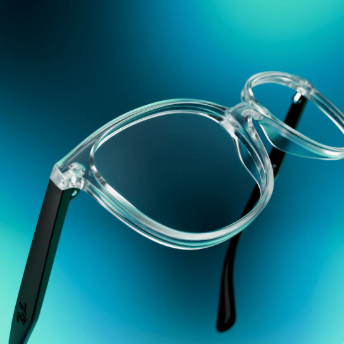
In 2020, Essilor unveiled the first generation of Essilor® Stellest® lenses, slowing myopia progression by 67% on average, helping millions of children worldwide.
Building on the success of the previous generation, Essilor® Stellest® 2.0 lenses provide twice the power, slowing eye growth by 1.88 times more than with the previous generation.
Benefits of Essilor Stellest 2.0 lenses

Twice the power, higher efficiency
In the management of myopia progression.

Myopia correction
Designed to provide clear vision thanks to your child's prescription.
No compromise
aesthetically pleasing, simple and safe6
Why choose the Essilor Stellest 2.0 lenses for your kid?

The power, higher efficacy in managing myopia progression.

Essilor's most efficacious myopia management spectacle lenses.

Efficacious in myopia management for children as young as 6 years old.
Manage myopia progression via H.A.L.T.® MAX technology
Essilor® Stellest® 2.0 lenses provide twice the signal for slowing myopia progression, delivering significantly better results than the first generation of Essilor® Stellest® lenses. The enhanced efficacy is supported by clinical trial results.
- Correct myopia — designed to provide sharp vision with your child's prescription.
- Myopia management — slow myopic eye growth with H.A.L.T. MAX technology.
Backed by real research
The mention "twice the power" refers to a depth of unfocused light volume (by design) twice (or more) greater than that of Essilor® Stellest® lenses, and is not associated with a doubling of lens power, microlens power or efficiency.
Based on the 12-month results of a prospective, randomized, double-blind, contralateral crossover clinical trial conducted in Singapore on 50 children.
Raveendran RN, et al. Effect of increased power and asphericity of highly aspherical lenslets on myopia control efficacy: a contralateral crossover study. Transl Vis Sci Technol. 2025;14(11):9.
No significant difference in distance BCVA between Essilor® Stellest® and Essilor® Stellest® 2.0 lenses when looking through the central zone of the lens (Drobe B, et al. Effect of increased power and asphericity of lenslets in myopia control spectacle lenses on short-term visual performance. Invest Ophthalmol Vis Sci. 2025;66:2144).
When viewed through the peripheral zone of the aspheric microlenses, no significant difference was observed between Essilor® Stellest® and Essilor® Stellest® 2.0 lenses for high-contrast, low-contrast, and low-contrast near visual acuity (VA). (EssilorLuxottica. Internal data. 2025. Impact of increased microlens power and asphericity on the short-term visual performance of myopia control lenses.)
Essilor® Stellest® 2.0 lenses are made of AIRWEAR® polycarbonate which offers impact resistance and blocks 100% of UV transmission.
Based on the 12-month results of a prospective, randomized, double-blind, contralateral crossover clinical trial conducted in Singapore on 50 children.
Raveendran RN, et al. Effect of increased power and asphericity of highly aspherical lenslets on myopia control efficacy: a contralateral crossover study. Transl Vis Sci Technol. 2025;14(11):9.
HALT stands for Highly Aspherical Lenslet Target and does not mean that the progression of myopia is "stopped" or "blocked".
Essilor® Stellest® lenses are not currently available in all countries, including the United States, and have not been authorized by the US FDA.
Essilor Stellest lenses explained
FAQs
-
Essilor® Stellest® lenses are eyeglass lenses designed to correct your child's nearsightedness while also helping to slow its progression. Stellest lenses slow myopia progression by 67% on average compared to single vision lenses when worn 12 hours a day. At FYidoctors, they're prescribed and fitted by optometrists at FYidoctors clinics as part of a doctor-led myopia management plan.
-
Stellest lenses use H.A.L.T. technology (Highly Aspherical Lenslet Target). The technology consists of 1,021 contiguous highly aspherical lenslets spread over 11 rings; the area of the lens without lenslets provides vision correction, while the aspherical geometry of the lenslets distributes light across a range in front of the retina (a volume of myopic defocus) — a signal that helps slow the eye's elongation.
-
Yes. Clinical data shows the lens slowed myopia progression by 71% on average over two years. The newer generation goes further: Stellest 2.0 lenses slow eye growth 1.88x more than the first generation, supported by a 2025 randomized, double-blind clinical trial — and this next-generation lens is available at FYidoctors clinics.
-
Stellest lenses are most effective when started early, with efficacy demonstrated in children as young as 6. Clinical indications cover children who, at initiation of treatment, are aged 6–12 years with spherical equivalent refraction of -0.75 D to -4.50 D and astigmatism up to 1.50 D. An FYidoctors optometrist can confirm candidacy during a children's eye exam.
-
Pricing varies by prescription, frame choice, and clinic. Many vision insurance plans cover a portion — FYidoctors can direct-bill most major insurers.
-
Yes. While single vision lenses are designed to correct vision for a single distance, Stellest lenses are specifically engineered to address myopia while also slowing its progression. Traditional single vision lenses correct vision but do not slow myopia progression.